
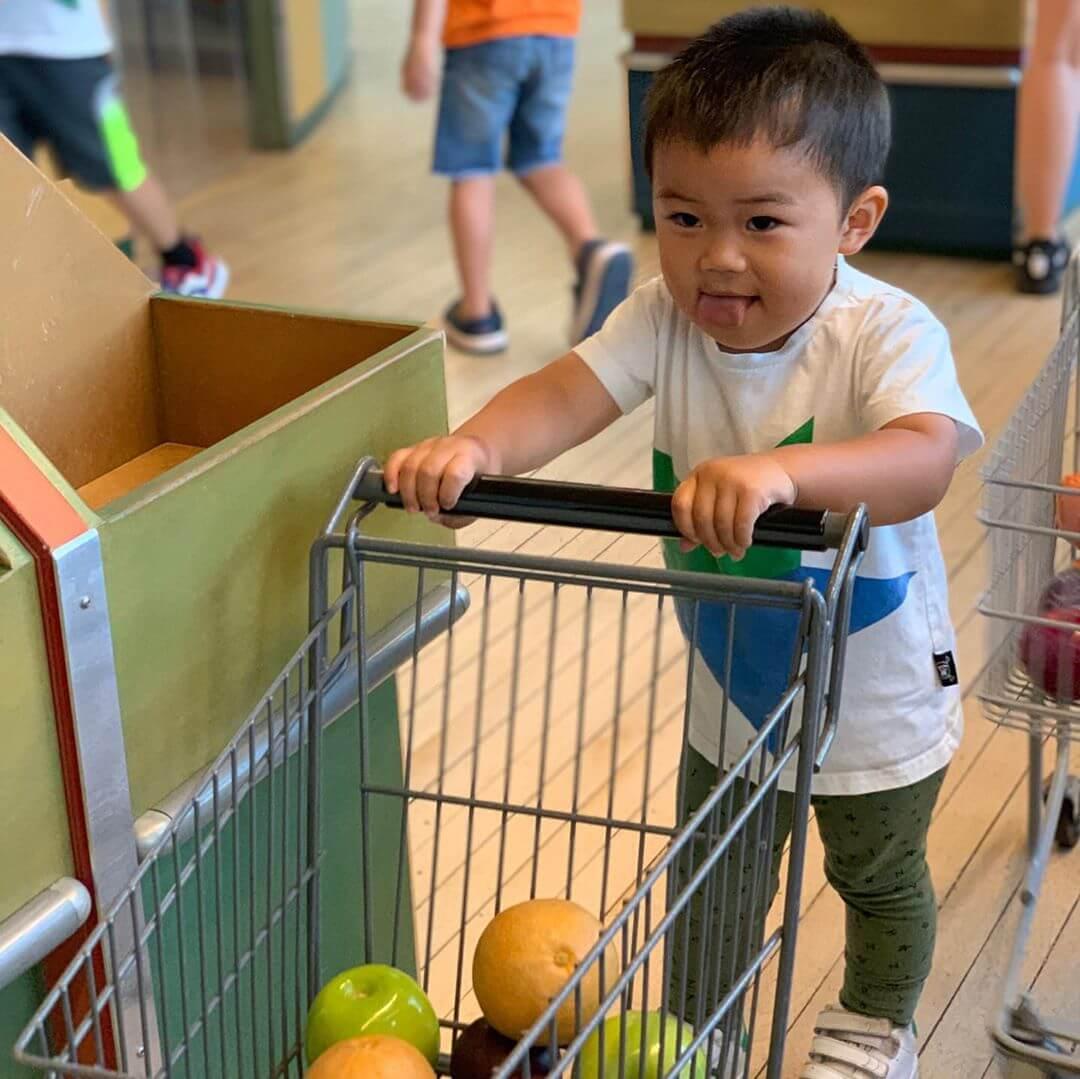
Picture a toddler pushing a tiny grocery cart, stopping at the fruit, and choosing an orange all on her own. Nobody told her to. That’s one of the quiet benefits of a children’s museum: kids practice real thinking while they play. Here’s what a visit builds, and how our hands-on exhibits make it happen.
Learning Happens Through Play
For little ones, play isn’t a break from learning. It’s how learning works. The American Academy of Pediatrics explains that play helps children build language, social, and thinking skills all at once.
In our Market, kids weigh fruit, count play money, and take turns as shopper and cashier. They’re practicing math, vocabulary, and patience. They just call it fun.
The same thing happens when kids pour, sort, and pretend. Every choice is a tiny experiment in cause and effect.
Try this: hand your child a shopping list, then let them lead the way.
Big Movement Builds Strong Bodies and Minds
Climbing is a puzzle for the whole body. Which handhold is next? Can I reach it? Will this tunnel fit me?
The three-story Climber gives kids dozens of chances to plan, test, and try again. Along the way they build balance, coordination, and the confidence that comes from conquering something tall. Climbing, crawling, and sliding also give busy bodies a safe place to burn off energy, which means a happier ride home.
Cheer them on, but resist the urge to boost them up. The moment they figure it out on their own is the best part.
Block Play and Science Spark Curiosity
Stack. Topple. Rebuild. In Block Mania, a falling tower teaches more about balance than any lecture could.
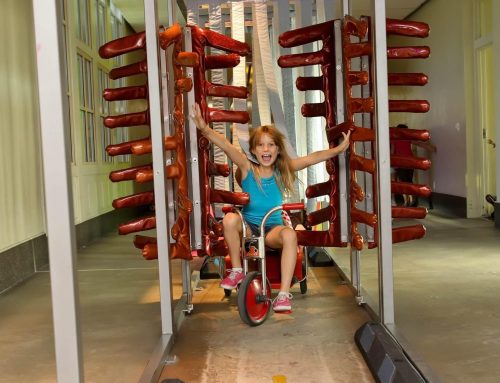
Science shows up everywhere else, too. At the Pit Stop, kids explore pushes and pulls. In the Noodle Forest, they discover what happens when their hands, eyes, and imaginations all get involved at once.
Ask “What do you think will happen?” and then wait. Their guesses are wonderful.
Block play teaches teamwork, too. When two kids want the same block, they learn to ask, share, and trade.
Imagination, Language, and School Readiness
Preschool teachers and parents agree: kids who love stories and conversation tend to feel ready for the classroom. Head Start’s school readiness guidance includes language, social skills, and approaches to learning, and a museum day touches every one.
Curl up with a book in the Book Loft. Then head to DramaRama, grab a costume, and act the story out. Retelling becomes performing.
Shy kids often find their voice here.
Conversation counts, too. Ask your child to tell you about their costume, and you’ll hear new words and big ideas.
Family Time You’ll Actually Remember
A museum day gives everyone something to talk about long after the car ride home. You’re not scrolling or multitasking. You’re stacking blocks, sharing a pretend meal in the Texture Café, and laughing at the same thing.
Three ways to make the day even better:
- Let your child choose the first exhibit.
- Ask open questions, like “What are you building?”
- Take a snack break and talk about your favorite part.
Want to keep the fun going? PBS KIDS for Parents offers play ideas for the days between visits.
Frequently Asked Questions
Q: What ages get the most out of a children’s museum?
A: Our exhibits are built for children 10 and under. Babies and toddlers love the sensory spaces, while older kids jump into building, climbing, and pretend play. Mixed-age families do great here, since every child finds a favorite spot.
Q: How long should we stay?
A: Follow your child’s energy. Toddlers often do best with a shorter visit, and bigger kids may want to stay until closing. There’s no wrong answer.
Q: Where can I find hours and tickets?
A: Our plan your visit page has current hours, ticket options, and everything you need before you come.
Come Enjoy the Benefits of a Children’s Museum
The best part of a museum day isn’t any single skill. It’s watching your child light up while they build, climb, and imagine. Bring grandparents, cousins, and friends along, because the fun grows with company. Come see it for yourself in the historic Monroe School building. Visiting often? A family membership means you can return whenever curiosity calls.